Unfolding mainly between the years of 1933-37 in Germany, my historical novel FAÇADE centers around a conflict between art and politics and incorporates several historical figures central to that conflict. Scroll to discover the top 10 historical figures featured in FAÇADE!
Disclaimer: The images in this post are historical and several contain symbols and insignia used by the National Socialist (NSDAP/Nazi) government of Germany that have been banned by Germany and other countries. The inclusion of the images here are purely for educational purposes and any symbols they contain are not in any way embraced by the author of this post.
1. Ludwig Mies van Der Rohe
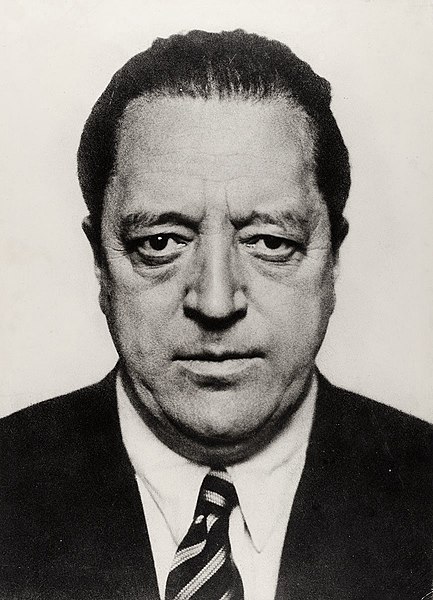
Ludwig Mies van der Rohe (March 27, 1886-August 17, 1969): Iconic 20th century architect and modernist pioneer. Mies was the third and final director of the Bauhaus school. FAÇADE features Mies’s final years in Berlin as he clashes with several top members of the Nazi party in his struggle to create art in a climate increasingly hostile to modernism.
2. Lilly Reich
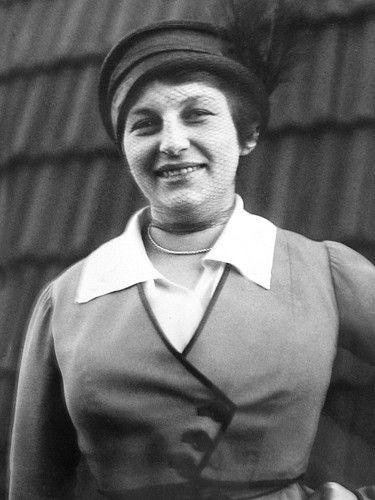
Lilly Reich (June 16, 1885 – December 14, 1947): German designer and architect known for her furniture, interiors, exhibition spaces, and textiles. Final director of both the weaving workshop and the building/finishing workshop at the Bauhaus. Lilly worked closely with Mies for over a decade, collaborating alongside him in many of his most famous commissions and exhibitions. Many of her contributions were credited to Mies at the time, with the full significance of her work not being uncovered until long after her death. In FAÇADE we see a multitude of ways Lilly comes to support Mies.
3. Alfred Rosenberg
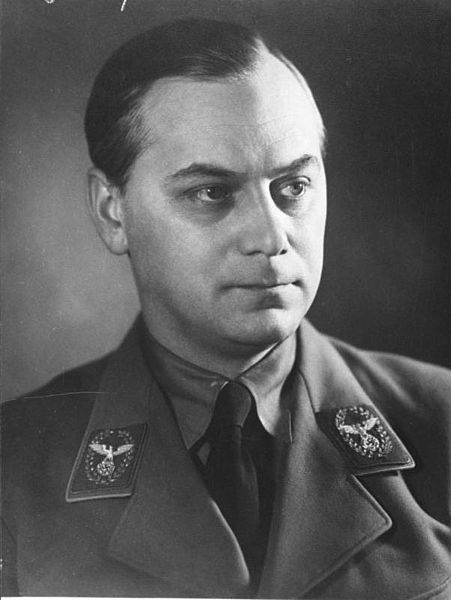
(Bundesarchiv, Bild 146-1969-067-10 / CC-BY-SA 3.0, no changes made)
Alfred Rosenberg (January 12, 1893 – October 16, 1946): A high-ranking member of the National Socialist Party who held several significant government posts, including an office for cultural policy and surveillance. Rosenberg was a vociferous opponent to modernism. He often clashed with Propaganda Minister Josef Goebbels, who also held sway over cultural matters in Nazi Germany and who for many years was perceived as an ally of modernism. In FAÇADE we witness an infamous meeting between Rosenberg and Mies following the shutdown of the Bauhaus school. At the Nuremberg trials after WWII Rosenberg was found guilty on numerous counts, including planning, initiating and waging war crimes and crimes against humanity. He was sentenced to death by hanging.
4. Rudolf Diels
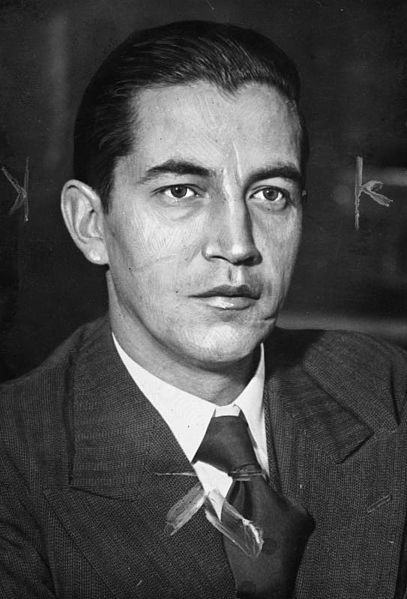
(Bundesarchiv, Bild 183-K0108-0501-003 / CC-BY-SA 3.0, no changes made)
Rudolf Diels (December 16, 1900 – November 18, 1957): Head of the Prussian Gestapo, or State Secret Police, between 1933-34, during the time the Bauhaus school was subjected to a Gestapo raid. Just as it had in history, in FAÇADE this raid prompts Mies van der Rohe to pay a visit to Diels at Gestapo headquarters in Berlin.
5. Karl Friedrich Schinkel
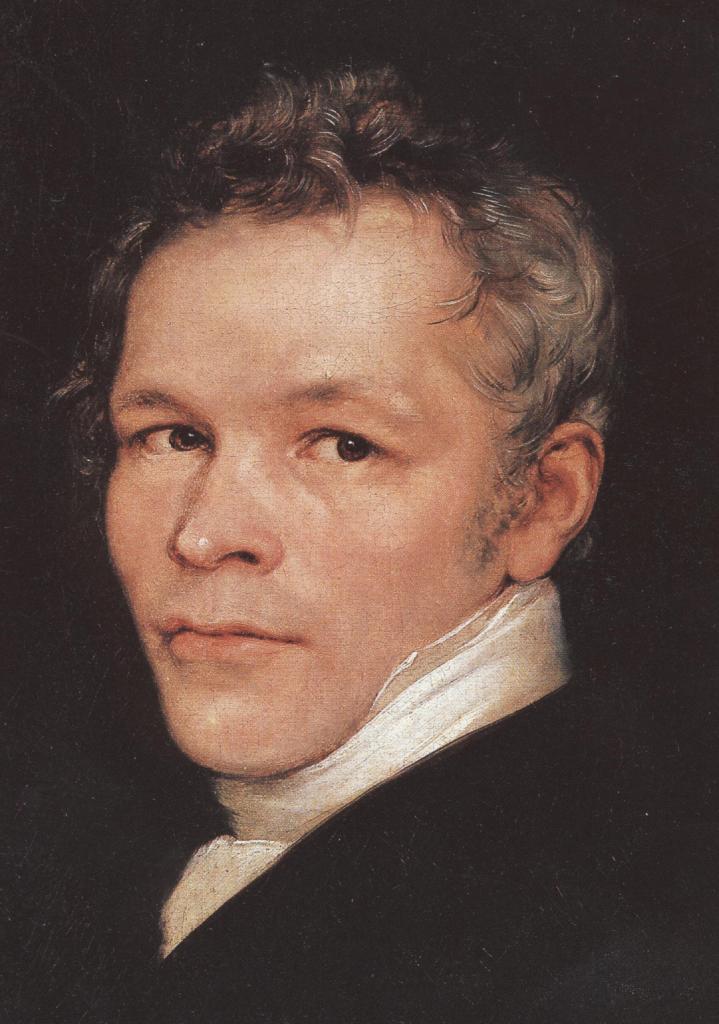
Karl Friedrich Schinkel (March 13, 1781 – October 9, 1841): Considered one of Germany’s preeminent architects. Designer of Neoclassical and neo-Gothic buildings, primarily found in Berlin. Although Schinkel was long-dead during the timeframe of FAÇADE, his spirit is alive and well; he is the sole common denominator between the polarized architectural schools of thought. His Altes Museum especially resounds throughout the story.
6. Josef Goebbels

(Bundesarchiv, Bild 183-1989-0821-502 / CC-BY-SA 3.0, no changes made)
Josef Goebbels (October 29, 1897 – May 1, 1945): Reich Minister of Propaganda and close ally of Adolf Hitler. Frequently a political rival of Alfred Rosenberg in the struggle for control of cultural matters in Nazi Germany, Goebbels was ultimately the force behind Gleichschaltung, the process of completely coordingating society through propaganda and censorship. In FAÇADE we witness Goebbels giving an inaugural address to the Reich Cultural Chamber; we hear echoes of his ranting speeches over the radio and watch him conduct a massive Nazi book burning in Berlin. Goebbels is indirectly responsible for at least one of Mies’s lost commissions; he is directly responsible for the confiscation of thousands of works of modern art from museums and art collections throughout Germany, and the persecution of their creators. In the last days of WWII, Goebbels and his wife committed suicide.
7. Gunta Stölzl

Gunta Stölzl (March 5, 1897 – April 22, 1983) German textile artist and Bauhaus Master renowned for her innovate work and signature style and the success of the Bauhaus weaving workshop under her direction. In FAÇADE we encounter Gunta endeavoring to establish a weaving mill against incredible odds, her little daughter Yael in tow.
8. Otto Marrenbach
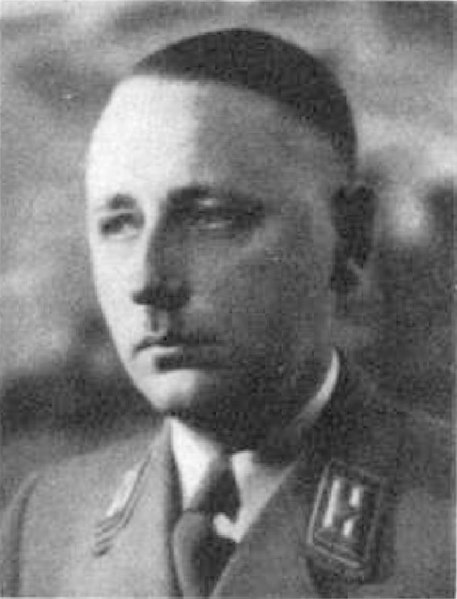
Otto Marrenbach (July 27, 1899 – August 10, 1974): the managing director of the National Socialist German Labor Front (DAF), which actively dissolved trade unions after Hitler took power in 1933 and sought to coordinate the working and leisure activities of all Germans according to Nazi principles. Membership the DAF soared from about 5.5 million in mid-1933 to 25,000,000 in the early 1940s, making it the largest of Nazi organizations. In FAÇADE Marrenbach, prompted by his superior, DAF Reichsleiter Robert Ley, coordinates the Labor Front’s involvement in the Reich capital’s most ambitious architectural venture.
9. Adolf Hitler
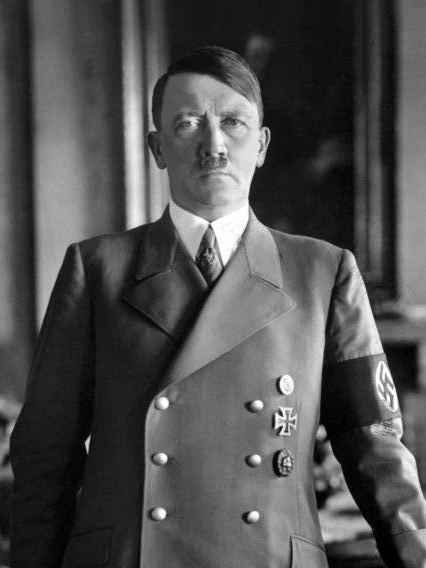
Adolf Hitler (April 20, 1889 – April 30, 1945): Infamous as the dictator of Nazi Germany, Hitler is also well-known as a failed artist. His strong personal opinions regarding art and architecture, heavily influenced by his racism, antisemitism, and notions of “life unworthy of life,” led to a nationwide persecution of artists and architects. Hitler is of course pervasive throughout FAÇADE; we are told at one point that he has personally destroyed one of Mies’s designs. We also witness a single chilling encounter between Hitler and one of FAÇADE’s main characters.
10. Albert Speer
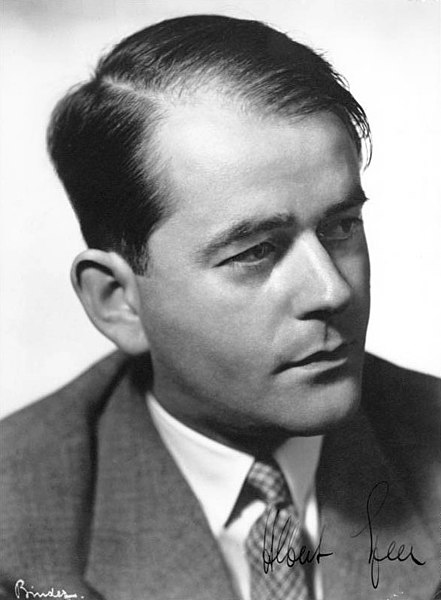
(Bundesarchiv, Bild 146II-277 / Binder / CC-BY-SA 3.0, no changes made)
Albert Speer (March 19, 1905 – September 1, 1981): Hitler’s chief architect and a member of his inner circle. Albert Speer was commissioned to build numerous structures for Nazi Germany, and as General Building Inspector for Berlin he was put in charge of realizing Hitler’s grandest schemes for the city. Between his actions in this capacity and those as Reich Minister of Armaments and War Production, Speer was ultimately found guilty of war crimes and crimes against humanity, although he evaded a death sentence. In FAÇADE (as in real life) the approved “Nazi style” is typified by Speer’s neoclassicism; for some only the grandeur of his works is immediately apparent. Eventually the architecture’s sinister motives become clear to all.
 christine beth reish